Pound Falls As UK Payrolls Plunge
Weak Jobs Data
The British Pound has come under fresh selling pressure today in response to weak UK labour market data this morning. The unemployment rate was seen rising to 5% with payroll employees falling by 100k, the largest drop since May 2020. This comes on the back of the prior month’s 28k decline and now marks three consecutive months of job losses. On a sector-by sector basis, the retail sector saw the biggest losses with 76k jobs lost last month. The decrease is being attributed to the impact of the war in the Middle East which has sent energy costs soaring, increases costs for business and impacting hiring confidence. Wage growth was also seen at very weak levels with the annualised 3-month reading coming in at just 0.6%, the lowest since around 2015.
BOE Rate Hike in Question
With the labour market clearly struggling, the big question is whether the labour force could handle a rate hike from the BOE. Tightening expectations have been rising in response to higher inflation and hawkish signals from the BOE. Tomorrow’s CPI print will now likely be the deciding factor for whether the bank hike rates next month. If inflation is seen lifting again this should cement the prospect of a hike next month, driving a fresh move higher in GBP. However, if inflation cools at all, this could give the BOE just enough wiggle room to hold off for another month, leading GBP lower near-term. Ultimately, however, while the US and Iran remain stalled in negotiations and energy prices remain elevated, rate hikes look more likely than not.
Technical Views
GBPUSD
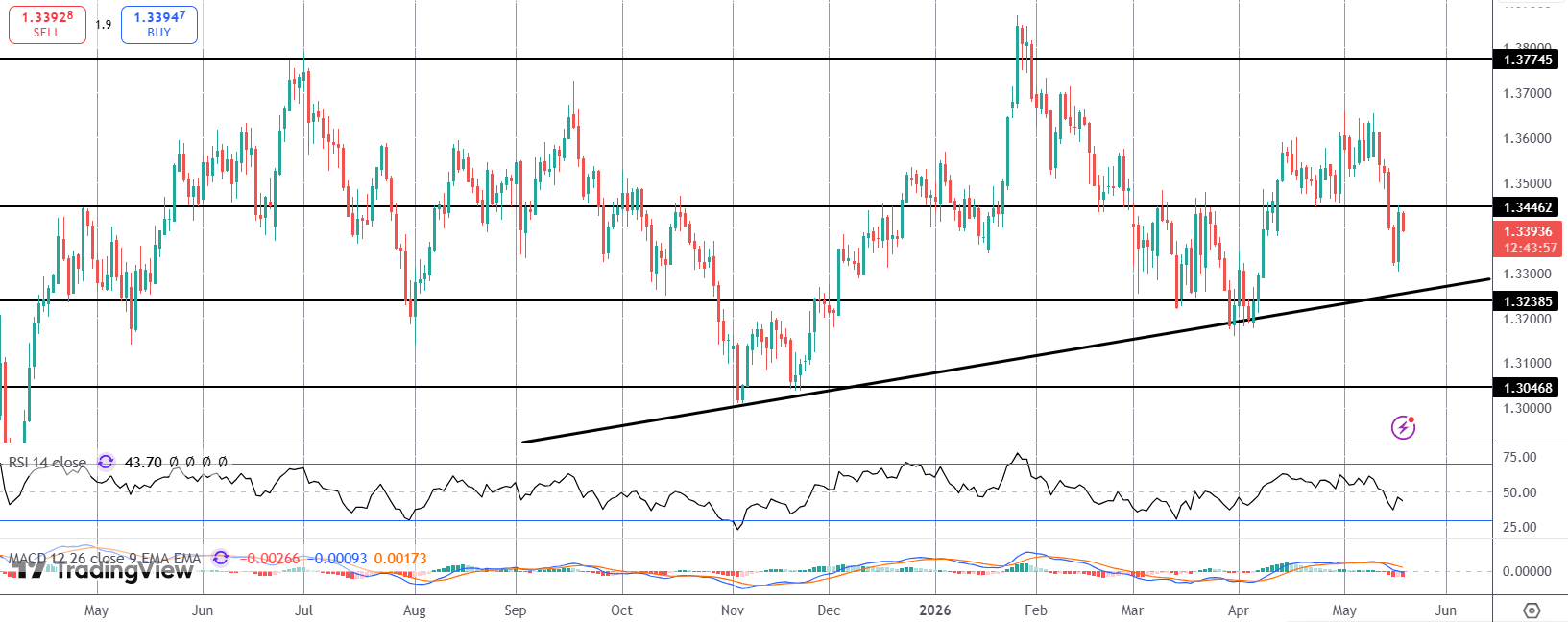
The sell off in GBPUSD has seen the market breaking back below the 1.3446 level, which has held as resistance so far over the course of the subsequent rebound higher. While below here focus is on a test of the next support at the bull trend line and 1.3238 level, which bulls need to defend to prevent a deeper drop towards 1.3046 next.
Disclaimer: The material provided is for information purposes only and should not be considered as investment advice. The views, information, or opinions expressed in the text belong solely to the author, and not to the author’s employer, organization, committee or other group or individual or company.
Past performance is not indicative of future results.
High Risk Warning: CFDs are complex instruments and come with a high risk of losing money rapidly due to leverage. 71% and 74% of retail investor accounts lose money when trading CFDs with Tickmill UK Ltd and Tickmill Europe Ltd respectively. You should consider whether you understand how CFDs work and whether you can afford to take the high risk of losing your money.
Futures and Options: Trading futures and options on margin carries a high degree of risk and may result in losses exceeding your initial investment. These products are not suitable for all investors. Ensure you fully understand the risks and take appropriate care to manage your risk.
With 10 years of experience as a private trader and professional market analyst under his belt, James has carved out an impressive industry reputation. Able to both dissect and explain the key fundamental developments in the market, he communicates their importance and relevance in a succinct and straight forward manner.