FTSE 100 FINISH LINE 20/5/26
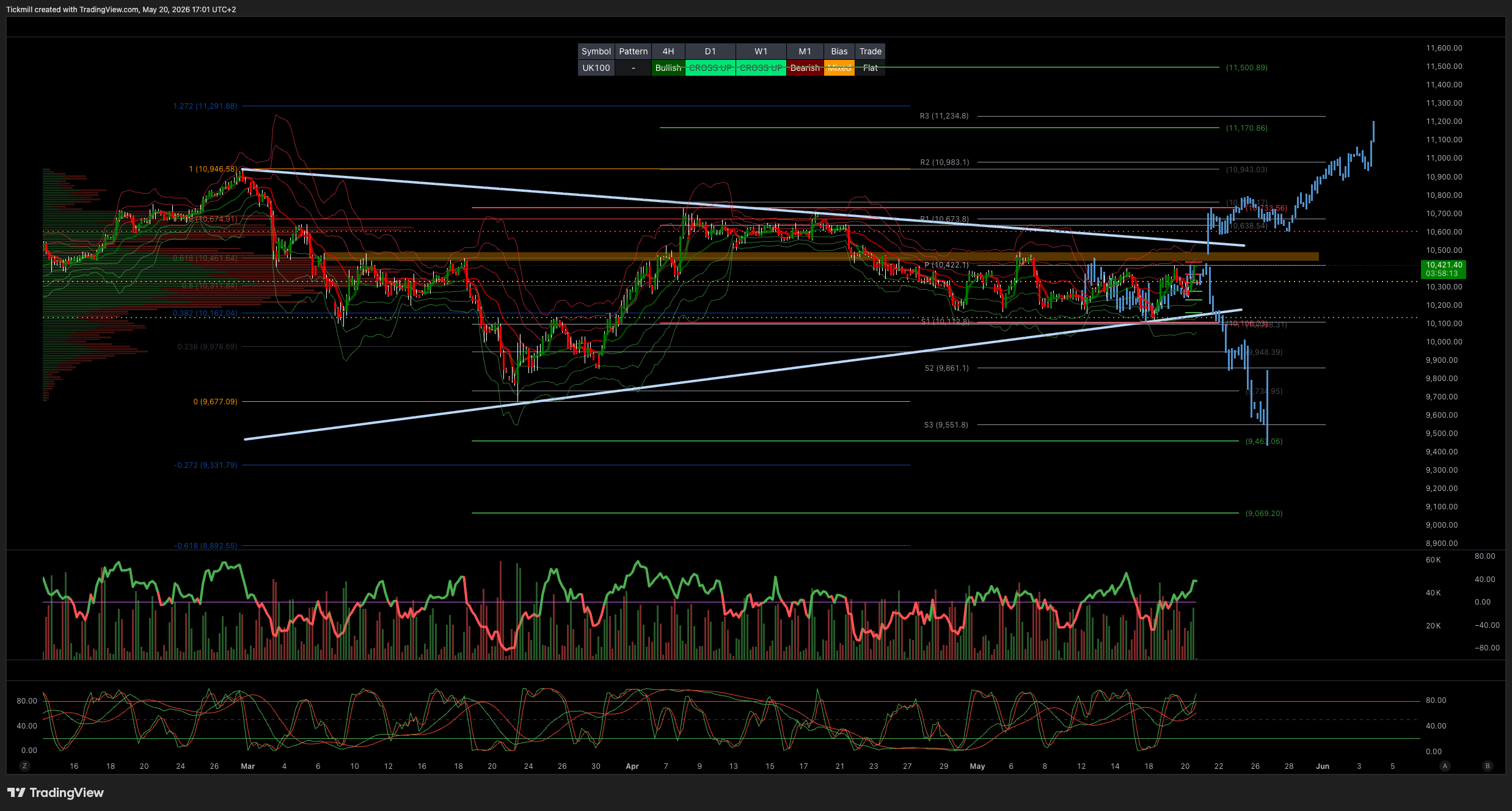
FTSE 100 FINISH LINE 20/5/26
Inflation Relief, Iran Risk and Bailey’s Breathing Space
FTSE 100 edged higher on May 20, with UK equities catching a modest bid after April inflation came in cooler than expected. Consumer prices rose 2.8% year-on-year, down from 3.3% in March and below expectations of 3.0%, giving investors a short-lived dose of relief after recent labour-market weakness and political volatility. The FTSE 100 was up 1%, heading into the close reflecting a market willing to lean into lower rate pressure — but cautiously. The rates narrative was complicated by the Iran war. Speaking to lawmakers on Parliament’s Treasury Committee, Bank of England Governor Andrew Bailey said the rise in market interest rates since the conflict began had given the Bank “a chance to evaluate our options.” He pointed to higher mortgage borrowing costs as evidence that financial conditions had already tightened, effectively buying the MPC time to assess the economic fallout. Bailey also noted that the outlook for growth and the labour market had become less optimistic, while wage settlements were gradually softening — all factors that reduce the urgency for immediate tightening. Still, the inflation relief came with an asterisk. Bailey described market expectations for energy prices as “fairly benign,” despite heavy damage to gas infrastructure in the Middle East, but investors remain alert to the risk that oil prices could rise again if disruption around the Strait of Hormuz worsens. That tension explains why markets are questioning whether the Bank of England is really ready to tighten further. Some analysts argue investors may be overestimating the MPC’s appetite for rate hikes, while the IMF has suggested the Bank may not need to raise rates again to bring inflation back to target. April’s 2.8% print was welcome, but the market knows energy could quickly turn today’s disinflation story into yesterday’s news.
Sector-wise, aerospace and defence stocks rose 1.6%, helped by a 3.2% gain in Babcock International after Peel Hunt upgraded the stock from “add” to “buy.” Marks & Spencer was the standout in the FTSE 100, rising 4.2% after guiding for profit growth this year, reinforcing investor appetite for companies able to deliver operational momentum despite a choppy consumer and policy backdrop. Against that, political uncertainty remained unresolved, with speculation continuing around Prime Minister Keir Starmer’s future and the broader Westminster risk premium still embedded in domestic UK assets. Finish Line: The FTSE crossed the line slightly higher on May 20, helped by a cooler inflation print and strong single-stock stories, but Bailey’s message was the real signal: tighter market rates have bought the BoE time — not clarity — as Iran war risks, energy uncertainty and Westminster instability keep the UK rally on a short leash.
TECHNICAL & TRADE VIEW – FTSE100
Daily VWAP Bullish
Weekly VWAP Bullish
Above 10500 Target 11000
Below 10100 Target 9469
Disclaimer: The material provided is for information purposes only and should not be considered as investment advice. The views, information, or opinions expressed in the text belong solely to the author, and not to the author’s employer, organization, committee or other group or individual or company.
Past performance is not indicative of future results.
High Risk Warning: CFDs are complex instruments and come with a high risk of losing money rapidly due to leverage. 71% and 74% of retail investor accounts lose money when trading CFDs with Tickmill UK Ltd and Tickmill Europe Ltd respectively. You should consider whether you understand how CFDs work and whether you can afford to take the high risk of losing your money.
Futures and Options: Trading futures and options on margin carries a high degree of risk and may result in losses exceeding your initial investment. These products are not suitable for all investors. Ensure you fully understand the risks and take appropriate care to manage your risk.
Patrick has been involved in the financial markets for well over a decade as a self-educated professional trader and money manager. Flitting between the roles of market commentator, analyst and mentor, Patrick has improved the technical skills and psychological stance of literally hundreds of traders – coaching them to become savvy market operators!